
Pest Library
Ants
The number one nuisance pest in North America, ants make up the majority of local pest problems. A single colony can hold 300,000–500,000 ants, survive more than seven years, and once one finds a way into your home, it's rarely alone.
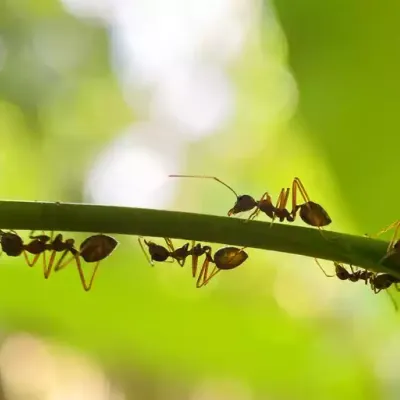
What Do Ants Look Like?
Ants are generally red, dark brown, or black, ranging from 1/8" to 1/2" — though some species grow as large as an inch. Queen and male ants have wings, though most common varieties don't usually fly. A colony has three types of ants:
- Queen: the largest ant in the colony, laying thousands of eggs over her lifetime — and living up to 30 years.
- Female (worker) ants: find food, care for the queen's offspring, and maintain and protect the colony.
- Male ants: exist solely to mate with the queen, typically dying within a month.
Where Ants Get Into Your Home
Ants are driven by a search for food, water, and shelter — and they communicate by scent trail, which is why you see them marching in a line once they find a way in. Tap a spot below to see the risk and the fix.
Tap any glowing spot to see why ants target it — and how to shut it down.
While the most effective way to prevent or address an ant infestation is to call in pest control professionals, you can also try these do-it-yourself methods:
- Place natural repellents like coffee grounds, peppermint oil, and lemon in areas where ants are likely to enter. This keeps ants at bay but likely won't resolve the source of the problem.
- Clean with a solution of equal parts water and distilled white vinegar, which ants dislike.
- Poison ants with bait stations or topical solutions from a home supply store — ideally, workers carry the poison back to the queen. In many cases, though, workers die before reaching the nest, so the poison never reaches the source of the problem.
Ants are driven by a search for food, water, and shelter. While it may be impossible to stop every ant, following some basic guidelines can help prevent an invasion:
- Avoid leaving food, dirty dishes, or food particles where ants can get to them.
- Use gap sealant or caulk to seal cracks and openings around windows, doors, and pipes so ants can't enter your home.
- Remove debris, rotting logs, and lumber from your yard.
- Repair leaks and dry out moist areas in your home.