
Pest Library
Bats
Bats play a vital role in the ecosystem, consuming thousands of insects — including mosquitoes — each night and contributing to pollination and seed dispersal. But when they take up residence in a home or building, they bring health risks and structural challenges with them.
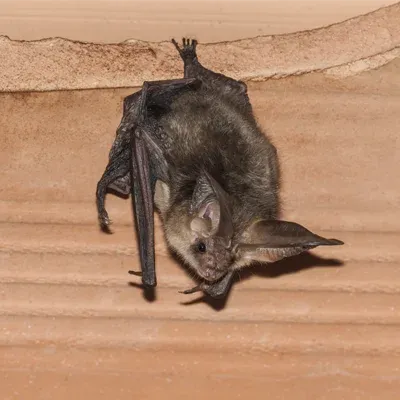
Are Bats Dangerous?
Bats are generally harmless to humans, but they can carry rabies and spread histoplasmosis, a respiratory illness caused by fungal spores in bat droppings. It's crucial to avoid direct contact and seek professional help when bats are present in your home.
Signs of a bat infestation:
- Squeaking noises — high-pitched sounds from walls, attics, or chimneys.
- Guano — accumulation of bat droppings, resembling dark, crumbly pellets.
- Stains or odors — yellowish stains and a strong ammonia smell caused by urine.
Where Bats Roost on Your Property
Bats roost in caves, hollow trees, and man-made structures — attics, barns, and chimneys among them. During winter, some hibernate in protected spots while others migrate. Tap a spot below to see the risk.
Tap any glowing spot to see the roosting risk there and what to do.
Bats are the only mammals capable of sustained flight, and they use echolocation to navigate and hunt in complete darkness. That said, if you're seeing signs of a bat infestation — squeaking in the walls or attic, guano, or ammonia-like odors — avoid direct contact and seek professional help.
Freedom Pest Control can safely and effectively manage bat presence in your Massachusetts home while helping you avoid the health risks that come with close contact.
Bats are nocturnal, active at night and resting during the day. They roost in caves and mines, hollow trees and foliage, and man-made structures like attics and barns. In winter, some bats hibernate in protected areas while others migrate to warmer climates — a seasonal pattern essential to their survival as food sources become scarce.
Supporting bat conservation efforts is important for ecological balance. Consider reaching out to local wildlife organizations if you'd like to help protect these creatures while keeping them out of your living space.