


Pest Library
Bed Bugs
Bed bugs are small, wingless insects about the size of an apple seed, reddish-brown with flat, oval bodies. They're nocturnal, hiding by day and emerging at night to feed — and their ability to hitchhike on luggage and furniture makes them highly mobile.
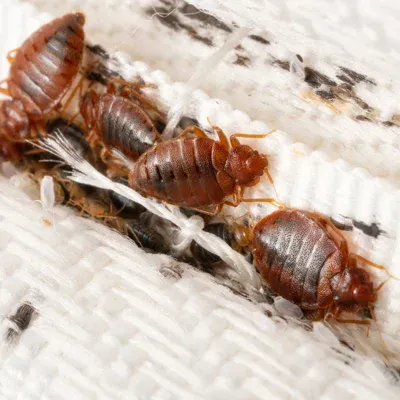
Signs of a Bed Bug Infestation
- Bites on skin: red, itchy welts in a line or cluster, typically on arms, neck, or face.
- Rusty or red stains: on sheets, mattresses, or clothing from crushed bed bugs.
- Dark spots: fecal stains resembling small black dots on bedding, walls, or furniture.
- Eggs and shell casings: tiny, pale eggs or translucent shed skins in cracks and seams.
- Unpleasant odor: a musty, sweet smell in heavily infested areas.
Where Bed Bugs Hide in the Bedroom
Bed bugs are remarkably adept at hiding, squeezing into the smallest crevices — attracted to the carbon dioxide and body heat of sleeping people. Tap a spot below to see the risk.
Tap any glowing spot to see why bed bugs hide there.
Myth: Bed bugs only infest dirty homes.
Reality: they're not attracted to dirt or filth, but to warmth, blood, and carbon dioxide. They can thrive in clean or messy environments alike.
Myth: Bed bugs are too small to see.
Reality: eggs and nymphs are tiny, but adult bed bugs are visible to the naked eye.
Myth: Bed bugs can fly or jump.
Reality: they can't fly or jump — they crawl from one place to another.
Dealing with bed bugs can be stressful and time-consuming; over-the-counter products are rarely effective against entrenched populations, which is why professional intervention usually makes the difference.
- Inspect secondhand items: carefully examine furniture, mattresses, and clothing before bringing them home.
- Be cautious while traveling: inspect hotel rooms for signs of bed bugs, keep luggage elevated on racks, and wash clothing immediately upon returning home.
- Declutter your home: reducing clutter eliminates hiding spots and makes infestations easier to spot.
- Seal entry points: repair cracks in walls, baseboards, and furniture where bed bugs could hide.