
Pest Library
Indian Meal MothsPlodia interpunctella
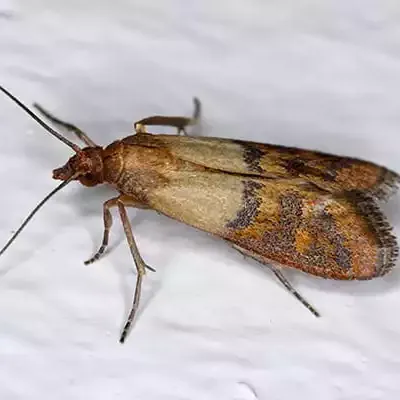
A prevalent household pest in Massachusetts, especially in kitchens and pantries. Adults are about ½ inch long with pale gray front wings and reddish-brown or coppery rear wings, and they can contaminate stored food with larvae, webs, and fecal matter.
Signs of an Infestation
- Moth sightings: adults fluttering around kitchens or near stored food, especially at night.
- Webbing: silk-like webbing in food packaging, containers, or on pantry shelves.
- Larvae: small, cream-colored larvae with brown heads visible in or around infested food.
- Damaged packaging: tiny holes or chew marks are larvae entry points.
- Odor: infested food may emit a musty or unpleasant smell.
Foods Commonly Targeted in Your Pantry
Any food stored in unsealed or poorly sealed packaging is at risk. Tap a shelf below to see what's commonly targeted and why.
Tap any glowing shelf to see the risk and how to store it safely.
Once an infestation is detected, quick action matters:
- Discard infested items: throw away all contaminated food and inspect nearby items carefully.
- Deep clean: empty the pantry, vacuum shelves, and clean with warm, soapy water or a vinegar solution.
- Seal food properly: store remaining food in airtight containers to prevent re-infestation.
- Use pheromone traps: place moth traps in the pantry to capture adults and monitor the infestation.
- Seek professional help: for severe infestations, consider contacting pest control specialists to ensure all stages are eliminated.
- Inspect groceries: check food packaging for signs of infestation before purchasing, especially bulk items.
- Use airtight containers: transfer pantry items into glass, metal, or plastic containers with tight-fitting lids.
- Practice FIFO: use older food items before newer ones.
- Keep pantries clean: regularly wipe down shelves, vacuum cracks and crevices, and discard expired items.
- Seal entry points: fix cracks and gaps in walls, shelves, or around windows.