
Pest Library
MiceMus musculus
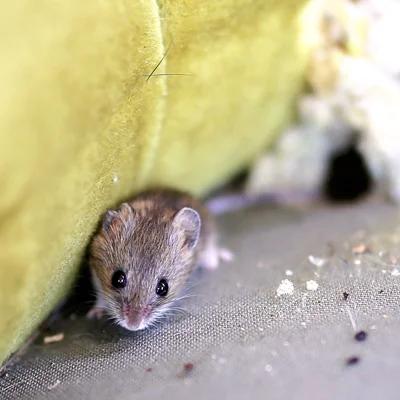
The house mouse is the species most likely to invade Massachusetts homes, though deer mice and white-footed mice will too. Adults run 5–7 inches including their tail, with light brown or gray fur and a lighter belly — and they can squeeze through openings as small as a dime.
Signs of a Mouse Infestation
- Droppings: small, dark, rice-shaped droppings near food sources, cabinets, or baseboards.
- Gnaw marks: on wood, plastic, wires, and food packaging.
- Scratching noises: at night in walls, ceilings, or under floors.
- Nests: built from shredded paper, fabric, or insulation, often in attics or behind appliances.
- Grease marks: oily smudges along walls where mice repeatedly travel the same paths.
Where Mice Get Into Your Home
Cold winters push mice indoors for warmth, and many Massachusetts homes have small gaps and cracks that make easy entry points. Tap a spot below to see the risk and the fix.
Tap any glowing spot to see why mice target it and how to shut it down.
If you suspect or confirm a mouse infestation, act quickly:
- Set traps: snap traps, glue traps, and live traps can reduce populations, but placement matters.
- Use bait stations: rodenticide bait stations are effective but must be used cautiously around pets and children.
- Clean infested areas: wear gloves and a mask while cleaning droppings and nests to avoid exposure to harmful pathogens.
- Call a professional: for severe or recurring infestations, professional pest control provides a comprehensive solution.
- Seal entry points: inspect for cracks, gaps, and holes, and seal with steel wool, caulk, or hardware cloth.
- Store food properly: keep all food, including pet food, in airtight containers.
- Keep a clean home: regularly clean crumbs, spills, and clutter that may attract mice.
- Eliminate hiding spots: reduce clutter in storage areas.
- Trim vegetation: keep shrubs and tree branches away from the house to reduce access points.
- Regular inspections: check basements, attics, and crawl spaces for signs of mice.