
Pest Library
Spiders
Spiders are arachnids, not insects, closely related to ticks and scorpions. Of the 40,000 known species worldwide, 3,400 live in North America. They're eight-legged, web-spinning, and genuinely help control insect populations — but that doesn't make them welcome indoors.
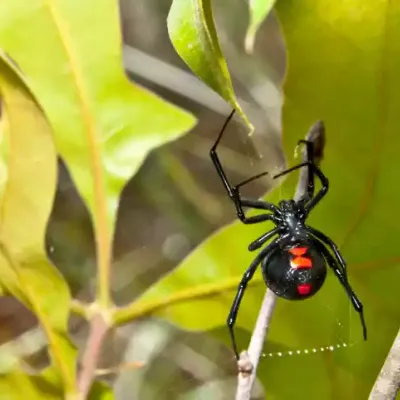
What Are the Risks of Spiders?
Some species can be harmful to people and animals. Spider fangs emit venom that, depending on the species, can range from mild to lethal. Possible symptoms of a bite include swelling, skin lesions, rash, itching, blistering, and pain, and bites can also trigger allergic reactions, difficulty breathing, muscle pain, nausea, fever, and headaches. In rare cases, venom can cause tissue death, nervous system paralysis, or worse.
Most spiders in the U.S. run 1/4" to 1" in length, with females usually larger than males. They shed their exoskeleton multiple times as they grow — a process called molting.
Where Spiders Hide, Indoors and Out
Spiders like hidden areas that are quiet and close to food and water. Indoors, that means clutter; outdoors, that means cover. Tap a spot below to see where and why.
Tap any glowing spot to see why spiders hide there.
Spiders prey on insects, small animals, and other spiders — they generally don't eat plant material. Many rely on webs to trap prey, while others actively hunt. Spiders aren't drawn to light themselves, but many of the insects they eat are, so you'll often find spiders near light sources.
They're cold-blooded, comfortable in cooler weather, and become more dormant (though they can still survive) in below-freezing temperatures.
All spiders can spin silk, which they use to build webs — a material made of protein that's considered the strongest natural fiber, able to withstand more stress proportionally than steel. Not every spider builds a web, though; some, like the Carolina wolf spider, live on or below ground and hunt actively instead.