

Pest Library
Stinging Insects
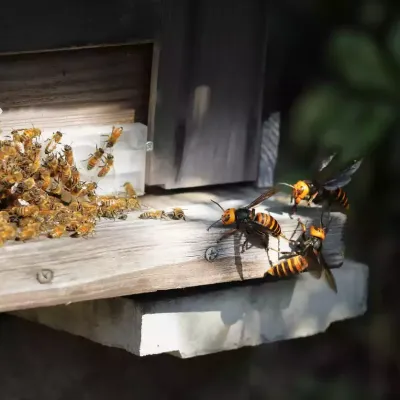
Bees, wasps, and hornets are both harmful and helpful. Bees pollinate 70 of the top 100 crops we eat; wasps earn their keep eating harmful insects. But when any of them interact with people or pets, the results can be painful — and sometimes dangerous.
What Are the Risks of Stinging Insects?
Bees, wasps, and hornets sting in response to feeling threatened. A single bee usually stings only once, while hornets and wasps can sting multiple times. More than half a million people are seen at emergency rooms each year from bee, wasp, and hornet stings, and about 100 people die annually from severe allergic reactions.
Beyond the sting risk, carpenter bees bore holes into decks and wood structures, and both bees and wasps will build nests in wall voids — creating holes to enter and exit your home.
Where Stinging Insects Nest
Social wasps build colonies in sheltered outdoor areas — trees, gardens, or structures. Nests often turn up under eaves, in window frames, under porches, or in the ground. Tap a spot below to see the risk.
Tap any glowing spot to see the nesting risk there.
Insecticide sprays designed for bees, wasps, and hornets can work when they make direct contact, but they can also irritate a nest and make it more active. Bees especially are important pollinators in decline worldwide, so it's advisable not to kill them if avoidable.
Because of the high risk associated with stings, the safest way to handle a bee, wasp, or hornet issue is to contact a licensed pest professional who can remove or relocate the nest.
- Do not wear yellow or white outdoors, as these colors attract insects.
- Ensure screens on windows are secure and tight.
- Inspect your property regularly for hives or nests.
- Do not engage with bees, wasps, or hornets.