

April 2026 Newsletter
From the Desk of Tom
I hope you're starting to enjoy the longer days. April is when things really begin to shift. As the snow continues to melt, moisture lingers around foundations, siding, and landscaping. That damp environment doesn't just wake up your lawn — it creates ideal conditions for pest activity to ramp up.
This is the time of year when small, hidden issues start becoming visible. Catching them early is almost always simpler — and far less expensive — than dealing with them later in the season.
I hope you find this month's update helpful as we move further into spring.
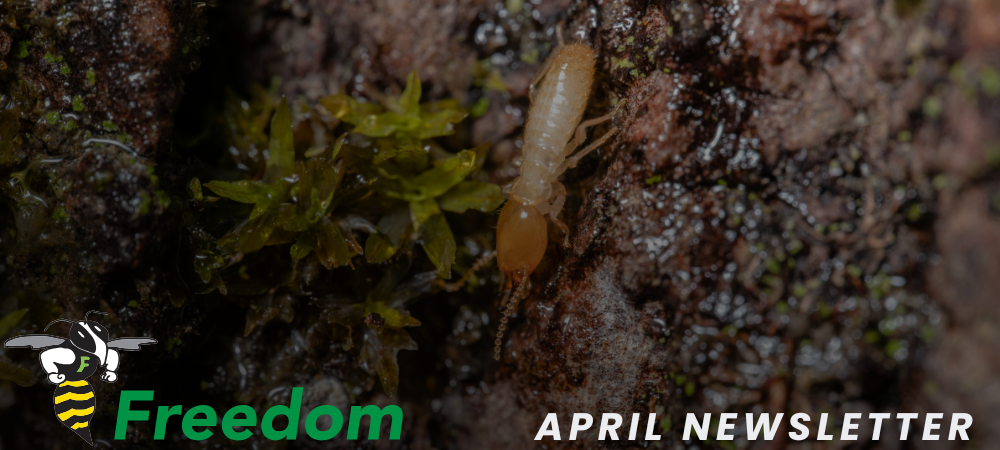
Pest of the Month: Termites
With the amount of snow we've had this winter, April is setting up strong conditions for termite activity.
As the ground thaws, moisture builds up around foundations and structural wood. Termites are drawn to these damp conditions, especially where wood is softened or in contact with soil. Unlike carpenter ants, termites actively consume wood — often from the inside out — which makes them difficult to detect until damage has already occurred.
Signs to Watch For
- Mud tubes along foundations or basement walls
- Discarded wings near windows, doors, or sills
- Wood that sounds hollow or appears blistered
- Swarming insects indoors, often mistaken for flying ants
If you see swarming insects inside your home this time of year, it's worth having it evaluated quickly. That's one of those "don't wait and see" situations.
Tick Season Starts Now
Tick treatments begin this month, and we're already seeing activity earlier than most people expect.
Early spring yard work — especially cleaning around shrubs, leaf litter, and perennials — puts people right into tick habitat. Combine that with the moisture we're seeing this year, and conditions are ideal for ticks to thrive.
What to Watch For
- Tick exposure while gardening or clearing beds
- Activity around shaded, damp areas of the yard
- Pets picking up ticks after being outside
Steps That Help Reduce Tick Activity
- Remove leaf litter and yard debris
- Trim back overgrown shrubs and groundcover
- Keep grass cut and edges maintained
- Create separation between lawn and wooded areas
Starting treatments early helps reduce populations before they peak later in the season.
Wildlife Watch: Grey Squirrels
April continues to be an active nesting period for grey squirrels. Female squirrels are still seeking out secure locations to raise their young, and homes remain a prime target.
Entry points are typically created along rooflines, soffits, and vents. Once inside, squirrels can cause damage to insulation, wiring, and structural components.
Signs to Watch For
- Daytime scratching or movement sounds
- New openings along roof edges or trim
- Debris or insulation appearing outside
- Increased squirrel activity around the home
Addressing entry points early can prevent more significant issues as nesting continues.
Rat Activity Update
As the snow fully melts, rat burrows and travel paths become much easier to identify. At the same time, breeding activity begins to increase with warmer temperatures.
Our Rat Map continues to show higher activity levels in larger cities throughout our region compared to surrounding towns. That pattern reinforces something we've seen consistently — rat populations are directly tied to food availability and environmental conditions.
Where trash management and sanitation practices are strong, rat pressure tends to be lower. Where food sources are abundant and unsecured, populations grow quickly.
This is why Integrated Pest Management (IPM) remains the most effective long-term approach to controlling rat activity. Reducing accessible food sources, securing trash, managing vegetation, and sealing structural gaps consistently produce better results than relying on treatment alone.
Without food, rat populations decline. With steady sanitation and structural maintenance, pressure remains manageable.
Not Sure What You're Seeing?
Seasonal pest and wildlife activity is predictable — but it's not always easy to tell what's normal and what isn't. If something seems off, it's worth taking a closer look. Learn more by requesting an evaluation below!