

June 2026 Newsletter
From the Desk of Tom
When I first started in pest management, most conversations about ticks revolved around Lyme disease. Today, the conversation has become much more complicated.
As we move into June and spend more time outdoors, tick activity increases significantly throughout Massachusetts and New Hampshire. While Lyme disease remains a major concern, homeowners are now hearing about other tick-borne illnesses, including anaplasmosis, babesiosis, Powassan virus, and Alpha-Gal Syndrome.
What makes ticks particularly challenging is that they thrive in many of the same places where families enjoy spending time—along wooded edges, near stone walls, in landscape beds, and around outdoor recreation areas.
The good news is that awareness and prevention go a long way. Understanding where ticks live and taking a few simple steps to reduce habitat around your property can significantly reduce the risk of exposure.
As always, our goal is not simply controlling pests. It's helping families identify potential risks and creating a safer environment around their homes.
— Tom Drapeau
Pest of the Month: Ticks
Three Tick Species Every New England Homeowner Should Know
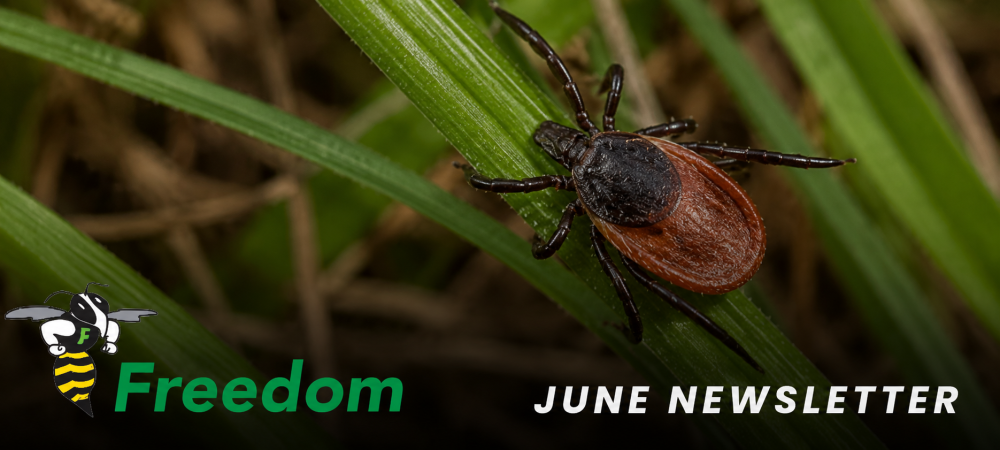
Most homeowners think about Lyme disease when they hear the word tick. While Lyme disease remains one of the most common tick-borne illnesses in New England, there are now three tick species homeowners should be aware of, each carrying different health concerns.
Blacklegged Tick, or Deer Tick
The blacklegged tick remains the most significant tick from a public health perspective in Massachusetts and New Hampshire. In addition to Lyme disease, deer ticks can transmit:
- Lyme Disease
- Anaplasmosis
- Babesiosis
- Borrelia miyamotoi
- Powassan Virus
Because immature deer ticks can be as small as a poppy seed, many people never realize they have been bitten.
American Dog Tick
The American dog tick is larger and easier to spot than a deer tick. While it does not transmit Lyme disease, it has been associated with:
- Rocky Mountain Spotted Fever
- Tularemia
Dog ticks are commonly found along trails, field edges, and areas of tall grass.
Lone Star Tick
The Lone Star Tick has been steadily expanding throughout Southern New England and has become especially common on Martha's Vineyard and Nantucket. This tick is easily recognized by the white spot found on adult females. The Lone Star Tick is associated with:
- Alpha-Gal Syndrome (Red Meat Allergy)
- Ehrlichiosis
- STARI (Southern Tick Associated Rash Illness)
Unlike deer ticks, Lone Star ticks are often more aggressive and will actively seek out hosts. As their range continues to expand throughout New England, homeowners should become familiar with this emerging pest.
Areas Where Ticks Thrive
Ticks are most commonly found in:
- Wooded property edges
- Leaf litter and brush piles
- Stone walls
- Tall grass
- Landscape beds
- Areas frequented by deer and rodents
Tick Prevention Tips
- Keep grass mowed regularly
- Remove leaf litter and brush piles
- Trim vegetation along lawn edges
- Reduce rodent harborage around the property
- Keep children's play areas and outdoor seating away from wooded edges whenever possible
- Perform regular tick checks after outdoor activities
- Protect pets with veterinarian-recommended products
- Shower after spending time outdoors
The best defense is reducing the environments where ticks thrive before populations reach their peak later in the summer.
Frequently Asked Questions About Ticks
Wildlife Watch: Birds Nesting in Vents
June is peak nesting season for many bird species throughout New England. One of the most common places birds choose to nest is inside exterior vents around homes. Common nesting locations include:
- Bathroom exhaust vents
- Dryer vents
- Kitchen exhaust vents
- Gable vents
To a bird, a vent appears to be a safe, sheltered location to raise young. Unfortunately, nesting activity can create several problems for homeowners.
Signs of Birds Nesting in a Vent
- Birds frequently flying to and from the same vent
- Chirping sounds coming from walls or ceilings
- Nesting material protruding from vent covers
- Reduced airflow from dryers or exhaust fans
- Staining around exterior vent openings
Problems Caused by Nesting Birds
One of the first issues homeowners notice is staining around the vent opening. Bird droppings, nesting debris, and moisture can discolor siding and trim over time. As young birds grow, waste accumulates inside the nesting area and may create unpleasant odors during warm weather.
Perhaps the most overlooked issue occurs after the birds leave. Bird nests frequently contain bird mites. These tiny parasites feed on birds while they are nesting. Once the birds leave, mites may begin searching for a new host and migrate into living spaces through wall voids, ceilings, and nearby rooms.
Homeowners sometimes notice:
- Tiny crawling insects near windows
- Mites appearing on walls and ceilings
- Biting or irritation complaints
- Sudden insect activity after birds have departed
A Word About Bird Removal
Many birds that commonly nest in vents are protected under federal and state laws. Once eggs or young birds are present, nests often cannot be removed until the birds have naturally fledged and left the nest. Because of these protections, it is important to correctly identify the species involved and determine whether active nesting is occurring before taking action.
Once the nesting cycle is complete, the nest should be removed, the area cleaned, and the vent protected with an appropriate wildlife-proof cover to help prevent future nesting.
Rat Population Watch
While summer often gives homeowners a false sense of security, rat populations continue to expand throughout many communities in Massachusetts and New Hampshire. Our Rat Map continues to show the highest activity levels in larger cities, but suburban neighborhoods are increasingly experiencing burrowing activity around homes, retaining walls, sheds, and landscaped areas.
A contributing factor is the increased emphasis on Integrated Pest Management practices and tighter restrictions on certain rodenticide uses in some areas. As a result, successful rat management depends more than ever on sanitation, exclusion, habitat reduction, and ongoing monitoring.
Without food, rat populations struggle to survive.
Areas with unsecured trash, outdoor pet food, excessive bird feeding, and heavy vegetation continue to experience the highest pressure. Remove bird feeders especially in the warmer months, take in pet food when they are done eating, and use metal trash cans whenever possible.
Signs of Rat Activity Around Your Home
- Burrows near foundations
- Droppings around trash storage areas
- Gnaw marks on plastic containers
- Missing bird seed or pet food
- Grease marks along walls and fences
The most effective long-term rat control program combines sanitation, exclusion, monitoring, and targeted treatment when necessary. As rat populations continue to grow throughout the region, early intervention remains the best defense.
Not Sure What You're Seeing?
Seasonal pest and wildlife activity is predictable—but sometimes it's difficult to tell what's normal and what isn't.
If you ever want a second set of eyes on something around your home, we're always available to help.
Not Sure What You're Seeing?
Seasonal pest and wildlife activity is predictable — but it's not always easy to tell what's normal and what isn't. If something seems off, it's worth taking a closer look. Learn more by requesting an evaluation below!