


Ant & Termite Swarming Season Is Here — Here's What to Do
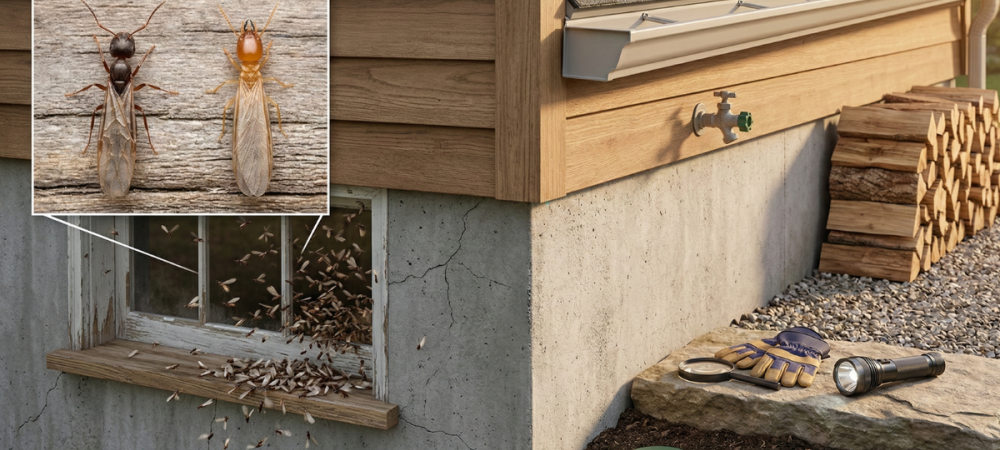
Every spring, the first warm days bring something most homeowners aren't expecting: clouds of winged insects pouring out of the ground, the walls, or the woodwork. If you're seeing them right now, you're not alone — and you're not imagining things.
What You Need to Know Right Now
- Ant and termite swarming season runs from March through June in New England, with peak activity following warm, rainy days.
- Swarmers look alike but require very different treatments — knowing which pest you're dealing with is the first step to protecting your home.
- Seeing swarmers indoors is a red flag. It often means an established colony has been growing in or near your home for years.
Spring in New England is short, and pests take full advantage of it. The moment temperatures climb and the ground thaws, two of the most destructive insects in the region start making their move. Termite and carpenter ant swarmers emerge by the hundreds, sometimes the thousands, looking for new places to settle and breed. In our 32 years protecting homes across Massachusetts and southern New Hampshire, we've seen this happen year after year, and the homeowners who act fast are always the ones who come out ahead.
Why Are There So Many Winged Insects Around My Home?
What you're seeing is a swarm — a mass emergence of winged, reproductive insects leaving an established colony to find mates and start new ones. It looks alarming, and for good reason. Swarming is not a random event. It only happens when a colony has grown large enough and mature enough to expand. That means if you're seeing swarmers, a colony has likely been quietly building for years nearby — possibly inside your home itself.
Up north, two insects are responsible for the majority of spring swarms: the Eastern subterranean termite and the carpenter ant. Both swarm in spring, both can be found in and around wood structures, and both are capable of causing serious damage. The key difference is how they operate and what treatment is required, which is exactly why proper identification matters so much.
What Triggers Swarming Season in New England?
Swarms are triggered by a combination of rising temperatures, moisture from spring rains, and colony maturity. Eastern subterranean termites — the only termite species found in this region — typically swarm from April through June, often in the morning following a warm rain. Carpenter ants follow a similar pattern, with peak swarming from May through early July, though established indoor colonies can produce swarmers as early as late winter if the structure is heated.
What we've found from thousands of service calls is that most homeowners only become aware of an infestation when swarmers appear. Termites spend their entire lives underground or inside wood. Carpenter ants forage mainly at night. A swarm is one of the only times these pests become visible, which makes it one of the most important warning signs a homeowner can catch.
How Do You Tell Termites and Carpenter Ants Apart?
This is the question we get most during swarming season. Both insects are winged, similar in size, and tend to appear in the same places around the home. But there are clear physical differences once you know what to look for:
- Body shape: Termites have a uniform, cigar-shaped body with no pinched waist. Carpenter ants have a distinctly narrow waist between the thorax and abdomen.
- Wings: Termite wings are equal in length, both pairs nearly twice the length of the body. Carpenter ant wings are unequal — the front pair is noticeably longer than the rear.
- Antennae: Termites have short, straight antennae. Carpenter ant antennae have an elbow-like bend.
- Shed wings: Finding piles of small, translucent wings near windowsills, door frames, or light sources is a strong indicator of termite activity. Termites shed their wings after mating; carpenter ants typically do not leave wings in the same concentrated way.
If you're unsure which pest you're dealing with, don't guess. Learn more about how ants behave and spread throughout a property — or call us for a professional identification.
Can You Just Spray the Swarmers You See?
It's tempting to reach for a can of bug spray when a swarm appears, and it will knock down what you can see. But killing swarmers does nothing to address the colony behind them. With termites, the swarmers are winged reproductives — the workers back in the colony are the ones actually consuming wood, and they don't swarm. With carpenter ants, swarmers are produced only after a colony reaches 3 to 6 years of maturity, meaning there are likely thousands of workers already established nearby.
Store-bought sprays and consumer baits can scatter an ant colony temporarily, sometimes making it harder to locate later. They do not eliminate termite colonies at all. And since both pests typically nest in areas that are difficult or impossible to access without professional tools and knowledge, surface treatments rarely reach the source. For a lasting fix, professional inspection and targeted treatment are the only reliable path forward.
You and I both know the instinct is to handle it yourself first — but with wood-destroying insects, the cost of waiting almost always outweighs the cost of acting early. Check out our ant prevention tips for steps you can take right now while you wait for an inspection.
What Does Professional Treatment for Swarmers Look Like?
The approach depends on which pest is confirmed. For termites, our process starts with a thorough inspection from a certified Wood-Destroying Insect (WDI) technician who looks for mud tubes, damaged wood, moisture conditions, and soil-to-wood contact. If activity is found, we use the Sentricon® Termite Colony Elimination System with Always Active™ technology — bait stations placed around the perimeter that termites prefer over wood. The colony feeds on the bait, carries it back, and the entire colony is eliminated over time. It's 24/7 protection without liquid chemical applications throughout your yard or crawlspace.
For carpenter ants, we identify the species and locate the primary and satellite nests, which can be inside walls, under flooring, or in wood with moisture damage. We treat nests directly and address the moisture or structural conditions that attracted them in the first place. Our inspection includes a full review of conditions that make your home vulnerable, not just a surface-level spray.
If it's swarm season and you're seeing activity, now is the right time to schedule your inspection. Our professional termite control services and carpenter ant treatments are available to homeowners across our service area, often with same-day availability for new customers.
How Do You Reduce Swarm Activity Around Your Home?
You can't stop swarms from happening regionally, but you can reduce the conditions that attract termites and carpenter ants to your property specifically. What we tell every homeowner is to start with moisture — both pests are drawn to it.
- Fix leaks, repair gutters, and ensure downspouts direct water away from the foundation.
- Keep firewood stored off the ground and away from the exterior of the home.
- Eliminate contact between soil, mulch, and wood siding or framing.
- Trim branches and shrubs that touch the roofline or siding — these are common entry bridges for carpenter ants.
- Seal cracks in the foundation and around utility penetrations.
- Schedule a professional inspection each spring, before swarm season peaks.
Why Spring Is the Best Time to Act
A swarm is a signal, not just a nuisance. It means something has been building near your home long enough to reproduce and expand. Catching it now — before the colony establishes further, before the damage compounds — is always less expensive than addressing it later. Freedom Pest Control has been protecting homes across Massachusetts and New Hampshire for 32 years, and we've seen firsthand what early intervention prevents.
Seeing Swarmers? Don't Wait.
Swarming season is short, but the damage from the colonies behind the swarm is not. If you're seeing winged insects around your home this spring — indoors or out — the smartest move is a professional inspection. Contact Freedom Pest Control today for a free quote and let us identify what you're dealing with before it gets worse. Same-day service is available for new customers.